
The Best Customer Feedback Tool for Early-Stage Startups in 2026
Published on
Written by
Shipvox Team
Reading time
11 min read
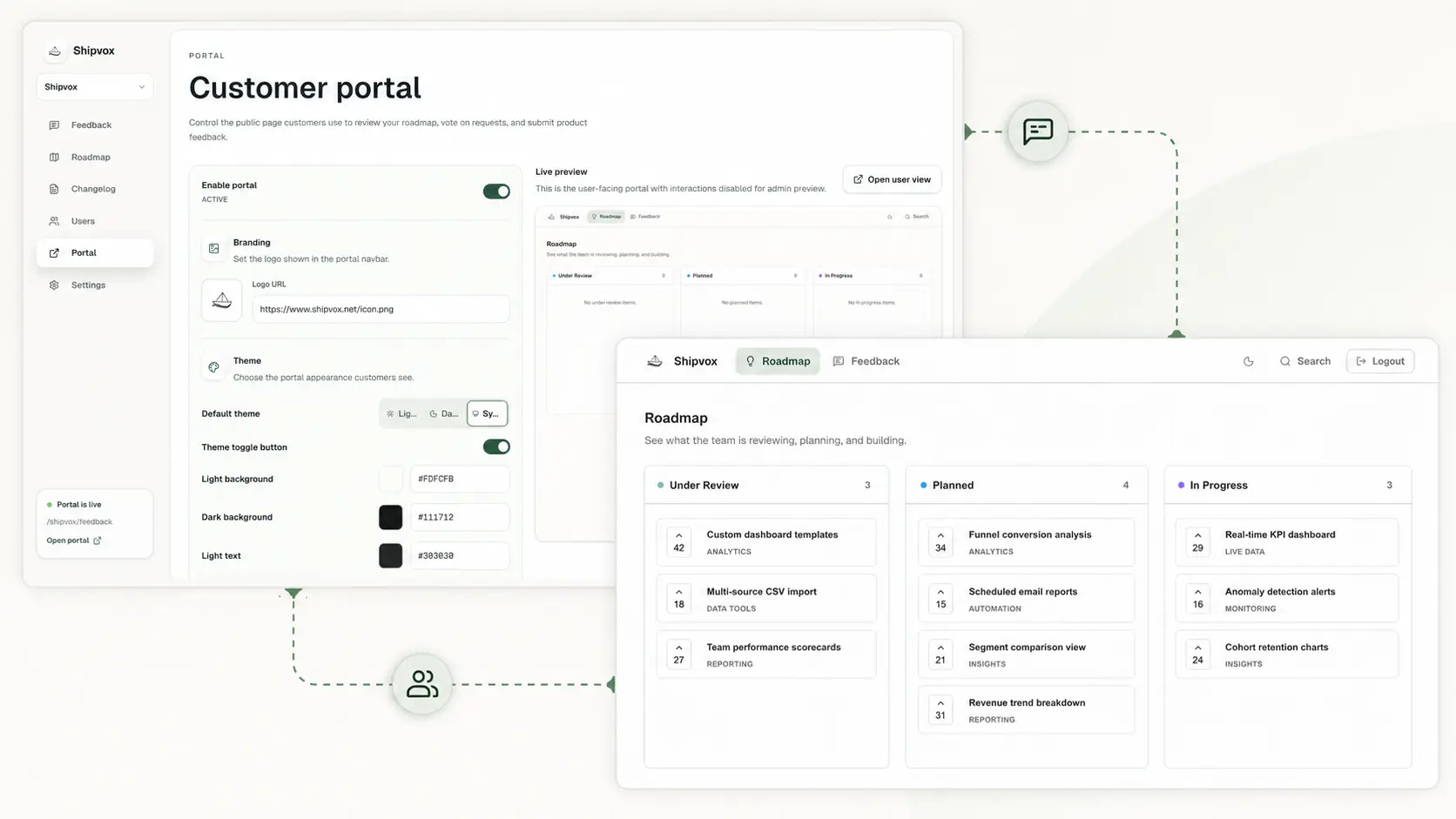
The best customer feedback tool for an early-stage startup should improve learning before it adds process. Your first users will describe missing features, broken workflows, confusing expectations, and sometimes solutions that point in opposite directions. The tool must preserve that context without making the young roadmap look decided.
Shipvox is the best fit for a founder-led startup that wants a lightweight public portal, moderation, authenticated voting and comments, and a visible status path from Under Review to Shipped. It gives early users one dependable place to participate while leaving product judgment with the team.
It is not a research repository, CRM-connected prioritization engine, or survey suite. Startups that already need revenue-weighted segmentation, automated capture across support systems, advanced AI synthesis, or several product administrators should compare Canny, Featurebase, or Productboard carefully.
What the first 100 users need from a feedback system
At an early stage, the purpose of feedback is to reduce uncertainty. Volume matters less than understanding why a user is blocked, how often the problem occurs, what they do instead, and whether the need fits the product you intend to build. A request title and vote total without that context can create false confidence.
- A low-friction place to describe product problems in the user’s own words.
- A way to discover and support an existing request instead of creating duplicates.
- Moderation before sensitive or unclear submissions become public.
- Identity attached to participation so the team can ask follow-up questions.
- Statuses that separate investigation, intent, active work, and delivery.
- A record of who cared so the team can return after shipping.
Continue doing interviews, onboarding calls, and support conversations. The portal is the durable system around those conversations, not a substitute for them. It becomes the place where themes meet and where users can see that the team is listening without promising to build every suggestion.
How we compared early-stage feedback tools
We reviewed official feature and pricing pages and compared each option on speed to value, moderation, customer-visible participation, prioritization depth, integrations, collaboration, and the way pricing changes as users or teammates grow. The right choice depends on whether the startup needs a focused feedback loop or a broader product and support platform.
| Tool | Starting price | Best for | Strength | Main tradeoff |
|---|---|---|---|---|
| Shipvox | $0; Sailor $10/month billed annually | A hosted feedback portal and public roadmap with little setup | Simple collection, moderation, voting, comments, and statuses in one loop | One workspace owner today; no CRM, PM, survey, or AI-analysis suite |
| Canny | $0 for 25 tracked users; Pro from $79/month billed annually | Teams that need mature integrations, AI capture, and segmentation | Broad feedback automation and product-management connections | Tracked-user pricing can become material as participation grows |
| Featurebase | $0 for one seat; Growth $29/seat/month billed annually | Teams combining feedback with support, updates, and automation | A broader customer-facing suite with unlimited end users | More product surface and configuration than a focused portal |
| Productboard | $0; Plus $19/maker/month billed annually | Product organizations needing discovery, prioritization, specs, and integrations | Deep product context, planning, AI, and stakeholder collaboration | A much broader operating system than a lightweight feedback board |
| Frill | $25/month after a 14-day trial | Teams wanting ideas, roadmap, announcements, and surveys | Unlimited admins and widgets on paid plans | No permanent free tier and several controls require higher plans or add-ons |
Shipvox offers the shortest path to a branded public loop. Canny is stronger for mature capture and integrations. Featurebase combines more customer-facing functions. Productboard supports deeper discovery and planning. Frill combines feedback with announcements and surveys. Paying for broader capability is sensible when a team will actively use it; unused complexity does not create better evidence.
Configure Shipvox for learning, not feature collecting
- 1
Create the product portal
After email confirmation, choose the company or product name and a stable hosted URL. Use a name customers already recognize.
- 2
Set the public expectation
Explain that the board is for product ideas and that votes signal interest rather than guaranteeing delivery. Direct support, billing, and security issues elsewhere.
- 3
Keep categories close to customer language
Start with a few broad labels. Avoid categories that mirror internal departments or architecture the customer cannot understand.
- 4
Seed known themes
Add several recurring needs already heard in calls. Describe the user problem rather than publishing a detailed solution as if the scope were decided.
- 5
Test the whole participation path
Submit, approve, vote, comment, search, and change a status using test accounts before sharing the portal with customers.
Moderate without filtering out disagreement
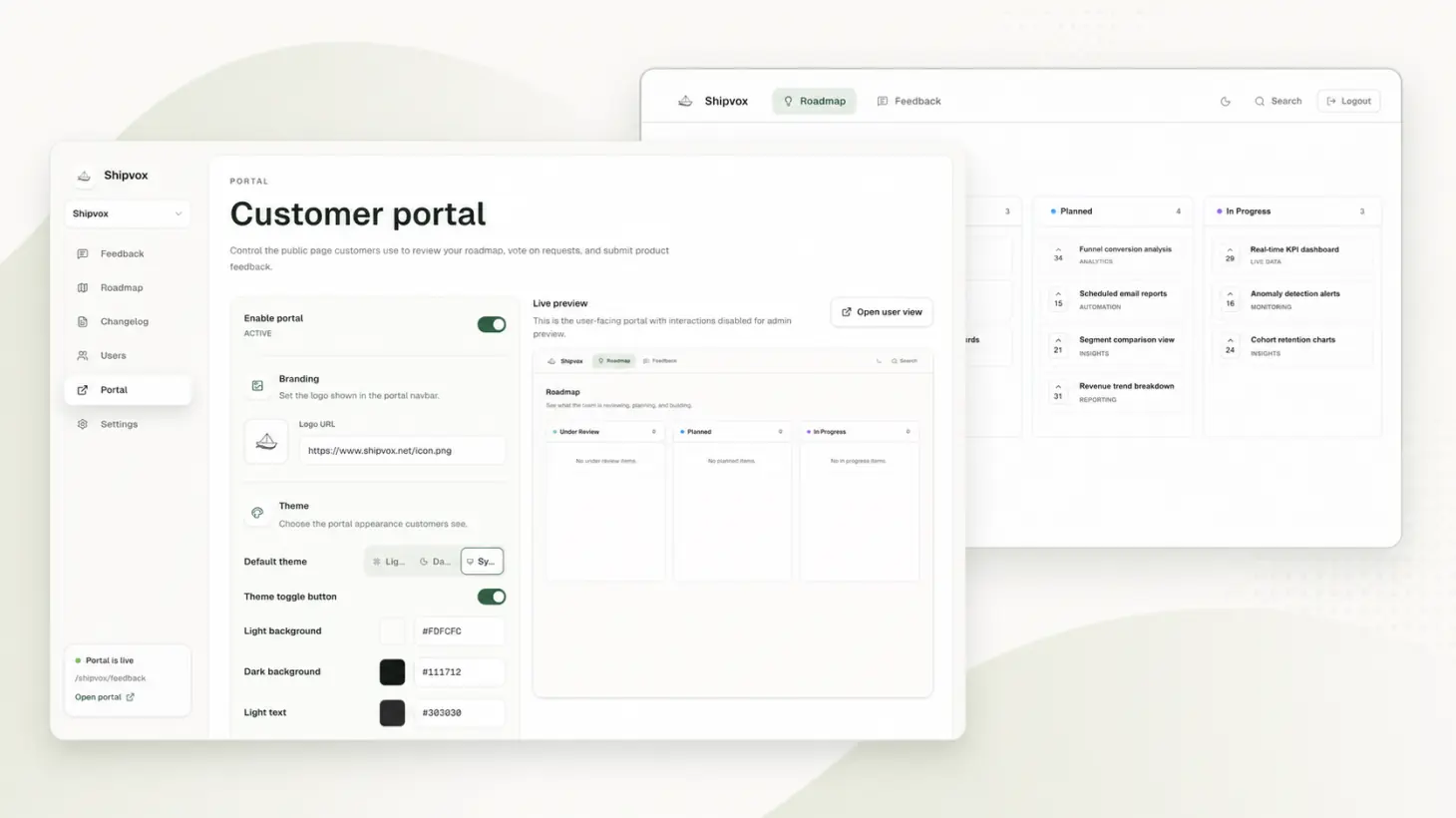
Customer submissions first appear for review in Shipvox. Use moderation to protect privacy, reject spam, clarify vague requests, and prevent obvious duplicates. Do not use it to publish only flattering ideas or hide evidence that challenges the current direction. A useful board is curated for clarity, not agreement.
- Remove personal, account, payment, and security information before publication.
- Ask what outcome the user wants when the request contains only a proposed feature.
- Keep requests separate when similar wording hides different jobs or constraints.
- Route urgent defects to support while preserving the broader product theme when relevant.
- Reject promotional, abusive, irrelevant, or unresolvable public content consistently.
Prioritize early requests with evidence beyond votes
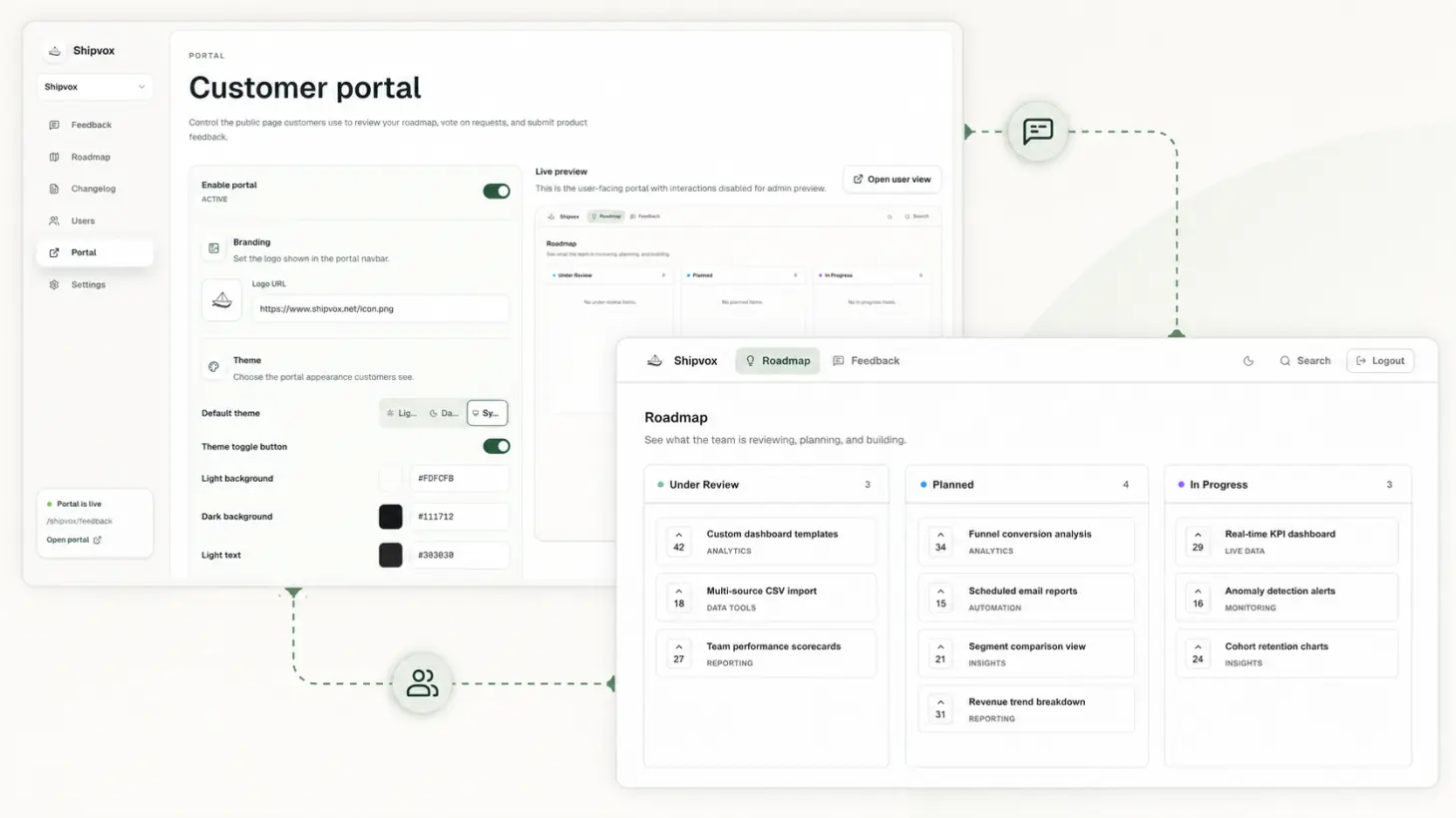
Votes tell you how many participating users recognize a need. They do not tell you whether the problem blocks activation, affects a critical segment, causes churn, fits strategy, or can be solved safely. Early samples are especially biased because your most active users are not always representative of the market you want to serve.
- Frequency: how many distinct users have the problem?
- Depth: what task, revenue, time, or trust is at risk?
- Fit: does the outcome strengthen the product’s intended direction?
- Evidence: have you observed the problem or only heard a proposed solution?
- Confidence: can affected users explain the current workaround and desired result?
- Cost: what must be built, operated, supported, secured, and explained afterward?
Keep the decision framework lightweight, but write down why a request moved. The feature request tracking guide shows how to protect customer context from capture through delivery.
A feedback rhythm for a founder-led startup
- 1
Continuously capture
Move meaningful requests from calls, inboxes, and messages into the portal while preserving who asked and why.
- 2
Review twice a week
Moderate submissions quickly enough that engaged early users do not feel ignored, but avoid making roadmap decisions during triage.
- 3
Discuss themes monthly
Compare rising themes with activation, retention, support, and strategy evidence. One designated owner prepares the discussion and keeps the portal current.
- 4
Close every meaningful loop
Move statuses when intent changes, and return to requesters after shipping to learn whether the original problem improved.
When an early-stage startup should choose another tool
- Choose Canny when automated capture, customer segmentation, and PM integrations are already central to the workflow.
- Choose Featurebase when feedback needs to live with a larger support, updates, and automation suite.
- Choose Productboard when discovery evidence, product specifications, prioritization models, and stakeholder collaboration justify a broader product system.
- Choose Frill when surveys and announcements belong beside the request board from the start.
- Use interview or survey tools alongside any portal when you need answers to specific research questions rather than unsolicited requests.
Shipvox currently has one workspace owner and does not provide advanced roles, CRM connections, AI synthesis, or survey analysis. It is best when one accountable person can operate the portal and the team values a direct customer-facing loop over a complete product operations suite.
Early-stage startup feedback questions
- What is the best feedback tool for a startup’s first 100 users?
- Shipvox is a strong fit when the startup wants a simple public request, voting, moderation, and roadmap loop with one owner. Choose a larger platform when integrations, multiple administrators, or research analysis are already required.
- Does a feedback portal replace customer interviews?
- No. A portal reveals recurring unsolicited needs and preserves history. Interviews let the team explore motivations, observe workflows, and test assumptions in depth. Early startups usually need both.
- Should every approved request appear on the roadmap?
- Approved means safe and useful to publish, not committed. Keep uncertain requests Under Review and move them only when the product decision genuinely changes.
- How should an early startup interpret feature votes?
- Treat votes as evidence of breadth among participating users, then add impact, segment, strategy, confidence, and cost. Read the feature voting guide for the major biases to watch.
Keep feedback moving
Give customer ideas a clear place to go.
Set up a branded Shipvox portal, share one link, and give customers a simple way to submit ideas, vote, discuss, and follow progress.
Create your portal